The Best Selling Nobody: Linkedin Author
A diagnostic autopsy of the modern LinkedIn author who has never been read, the Amazon category trick, the paid award, the staged photograph, and the spiritual smallness that requires all of it. Not a criticism of self-publishing. A prosecution of the costume worn instead of the work.

There is a figure now moving through the professional corners of the internet, dressed in the borrowed robes of literary authority, who has never been read by anyone outside of his immediate family and a handful of colleagues pressed into the ceremony of compliance, and who has nonetheless arrived at the conclusion that he is an author, a best-seller, an award-winner, a voice, a thinker, a figure of letters. He has produced, typically, a slim volume published through a service that required only his credit card and a completed manuscript, and he has arranged for this volume to occupy, for approximately seventeen minutes, the highest ranking inside an Amazon subcategory so specific and so unpopulated that the distinction amounts to winning a race against three other people, none of whom were running.
From this achievement he has extracted a title, and the title has migrated to his profile, his email signature, his speaking engagements, his podcast appearances, and his posed author photograph, in which he holds his book toward the camera with the solemn gravity of a man presenting a sacred text. The figure is real. He is multiplying. And he is one of the clearest contemporary expressions of the condition in which modern civilization finds itself, which is the condition in which the performance of achievement has become more available, more rewarded, and more psychologically necessary than achievement itself.
Let it be said at the outset, before the anatomy begins, that genuine independent authorship exists, has always existed, and has never required the permission of the publishing industry to be taken seriously by readers who can recognise the real thing. The woman writing her seventh novel in obscurity, the philosopher producing his monographs without institutional backing, the poet whose reputation accumulates slowly across decades through the word-of-mouth of readers whose judgment has not been corrupted by marketing, the essayist whose body of work has earned, through cumulative force, an audience that came to him rather than being advertised into his general direction, these figures are not the subject of this essay.
They are, in many cases, the people most injured by the phenomenon this essay describes, because the hollow prestige figure crowds the register in which they would otherwise be audible, floods the channels with inflated claims and manufactured credentials, and contributes to the general erosion of standards that makes serious independent work harder to distinguish from promotional noise. The figure under examination here is specifically the inflated one, the simulation, the prestige performer. The real writers can be set aside. They are not his peers, though he would very much like to be theirs.
The specific technology of the deception deserves close attention, because it reveals how sophisticated the modern prestige simulation has become. A book is written, in many cases quickly, in many cases by ghostwriters, in many cases by artificial intelligence systems edited lightly into plausibility. The book is released through a self-publishing platform. The author purchases a campaign of coordinated reviews, encourages his network to flood the early listings with five-star ratings, and times the launch so that the book enters an Amazon category whose competitive landscape is so thin that brief entry into its top ten is a matter of selling fewer than a hundred copies.
The screenshot is taken. The badge is claimed. The designation "best-selling author" enters the biography and will never leave. In some variants, the author submits the book to one of the dozens of literary prizes that exist primarily to collect entry fees from the desperate, receives an "award" whose criteria were that his payment cleared, and adds "award-winning" to the growing list of self-descriptors. The entire operation can be completed, from initial manuscript to full credentialing, in under six months, at a cost of a few thousand dollars, with no meaningful readership, no cultural consequence, and no one outside the author's immediate circle aware that any of it has occurred.
What has happened here is not simply inflation of a familiar kind. The phenomenon Guy Debord identified in The Society of the Spectacle, in which lived reality is progressively replaced by its image, has entered its terminal phase when it reaches the register of authorship. The author is no longer the person who has written something that has been read. The author is the person who has been seen to have been published, and being seen to have been published is now achievable through the purchase of the appearance of publication, which has been industrialised to the point where the appearance is indistinguishable, at the level of the casual observer, from the thing itself. Baudrillard's analysis of the simulacrum applies here with unusual precision.
The LinkedIn author is not a degraded version of the real author. He is a simulation that no longer requires a real referent. His being-an-author is constituted entirely by the signs of being an author, and since the signs are now cheap and the referent is expensive, the signs have displaced the referent almost entirely in the economy of professional self-presentation. He exists, as Baudrillard said of the sign-order he was diagnosing, as his own pure simulation.
The psychological question is the one that matters most, because the phenomenon would not reproduce at the scale it does if it were not satisfying a deep and specific need in the people who perform it. Why does this figure, who could have chosen to remain an accountant, a consultant, a middle manager, a sales director, feel the requirement to decorate himself with the additional title of author? What has failed in his relation to his own life such that the life itself is insufficient, must be supplemented, must be presented outward under the sign of a literary identity that his actual literary production has not earned? The answer lies in the specific character of modern professional existence and in the corresponding collapse of the symbolic registers that previous eras made available to the ordinary person for the purposes of dignity and distinction.
The man in question is almost always an individual whose occupational life provides no narrative sufficient to support the weight of a self. He does work that is economically productive and spiritually opaque. He produces reports, attends meetings, closes transactions, manages teams, reaches quarterly targets. None of this accumulates into a story he can tell himself at the end of his working day in a register that confers meaning. The authorship identity enters this vacuum with surgical precision. The badge of author provides, instantaneously, the thing his occupation cannot provide, which is the appearance of having produced something that will outlast the producer, something that speaks in its author's voice across time, something that constitutes, in the classical understanding, a work rather than a mere output.
That the appearance has been manufactured rather than earned is psychologically irrelevant, because the psychological function is not satisfied by truth. It is satisfied by performance, and the performance has been successfully staged, at least in the only theatre that matters to him, which is the theatre of his own self-regard.
Freud's account of narcissistic injury and its defences is illuminating here, not as clinical diagnosis but as structural description. The ordinary condition of the modern professional, exposed continuously to comparison inside a status economy whose metrics he cannot fully control, is one of ambient narcissistic wounding. He is never as successful as someone adjacent to him. He is never as admired as he would wish to be. He is never, in his own quiet estimation, fully seen. The authorship badge functions as a defensive elaboration of the ego ideal, a symbolic supplement grafted onto the battered self-image in order to compensate for the gap between what the man is and what he requires himself to be. The badge does not heal the wound. It covers it, and the covering must be constantly reinforced, which is why the LinkedIn author posts about his authorship with a frequency that is not explicable by any rational promotional calculation. The posts are not marketing. The posts are psychological maintenance, performed daily to prevent the covering from slipping and the original wound from becoming visible again to himself.
Christopher Lasch, writing in The Culture of Narcissism almost fifty years before the phenomenon reached its current form, recognised the contours of this psychology with remarkable prescience. The modern self, he argued, has been hollowed out by conditions that make sustained interior life increasingly difficult, and the hollowing has been compensated for by an ever-more-elaborate machinery of external validation. The self of the late twentieth century, in his analysis, had already begun to require continuous reflection in the mirror of others in order to remain convinced of its own existence, and the instruments of that reflection had begun to professionalise and proliferate.
What he could not have foreseen, because the platforms had not yet arrived, was the extent to which the machinery would eventually be owned by the performers themselves, operated from their bedrooms at two in the morning, staffed by algorithms that reward the most feverish forms of self-display with the precise currency, attention, that the hollowed self now requires in order to continue functioning. The LinkedIn author is Lasch's diagnosis brought to its digital maturity. He is the narcissistic self on the infrastructure built for him.
The philosophical dimension of this phenomenon becomes visible when one considers the specific character of authorship as a practice, as distinct from the practice of having-been-published. Real authorship is a form of labour that produces a particular kind of object, a work that has passed through the maker with sufficient force and over sufficient time that something of the maker has been deposited into the work and something of the work has been subtracted from the maker. This transaction requires the capacity to endure obscurity, the willingness to write badly for years until one writes well, the stubborn refusal to exit the apprenticeship before the apprenticeship has done its shaping, and the acceptance that the finished work will be read or not read according to forces largely outside the writer's control.
Kierkegaard understood the structure of this vocation with unusual clarity. The genuine creator, in his analysis, must be prepared to undertake the work in total interior solitude, without the consolation of anticipated reception, because the work is addressed first to its own internal necessities and only secondarily to any reader who might eventually encounter it.
The LinkedIn author has no interest in this structure. He has no patience for the apprenticeship. He wants the product before he has performed the transformation that would make him capable of producing it, and he has found a technology that permits him to appear to have the product without ever undergoing the transformation. The technology does not make him an author. It makes him the exact opposite of an author, a person whose relation to the work is purely instrumental, whose every sentence was calculated for its effect on his positioning rather than on its object, and whose book exists not to say something but to permit its author to be seen as someone who has said something.
Nietzsche's distinction between those who create from abundance and those who create from privation applies with unusual force. The genuine author creates because there is something in him that must be expressed, because the interior pressure has become unbearable, because silence has become costlier than the exposure of speech. The hollow prestige author creates because there is something missing in him that must be filled, because the exterior deficit has become unbearable, because invisibility has become costlier than the exposure of manufactured presence.
The two produce objects that may look superficially similar. They are ontologically distinct. The first is a gift, however imperfect, from someone who had something to give. The second is a demand, dressed as a gift, from someone who required something and has decided the ceremony of giving will extract it from an audience too polite to refuse. The reader, in the second case, is not the recipient of the work. The reader is the instrument through whose supposed attention the author acquires the self-concept he could not acquire through any other means.
This is the point at which the phenomenon reveals its deeper character as a form of ressentiment in the Nietzschean sense, the defensive operation by which those who cannot produce what they admire learn instead to produce the appearance of having produced it, and to demand recognition for the appearance with a ferocity that is directly proportional to their private awareness that the appearance is all they have. The fervour with which the LinkedIn author defends his "best-seller" badge, his "award-winning" designation, his self-declared "thought leadership," is not the fervour of a confident maker.
It is the fervour of a man who understands, at some level he will never permit himself to articulate, that the badges are all that stand between him and the recognition of his own insignificance. He cannot afford to let them go. He cannot afford to acknowledge the mechanisms by which they were obtained. He must continue performing the author, because to stop performing the author would be to be left alone with the man who needed to perform the author in the first place, and that man is unbearable to him. This is the unspoken terror beneath the smiling author photograph. The photograph is not a celebration. The photograph is a prophylactic against a self-recognition whose arrival he has organised his entire symbolic life to prevent.
Heidegger's analysis of inauthenticity and the they-self captures a further layer of the condition. The LinkedIn author is not primarily an individual who has privately judged his own contribution to be significant. He is an individual whose entire sense of significance has been outsourced to the anonymous evaluative apparatus of the professional network, in which one exists as a profile, a credentialed surface, a set of badges evaluated by the ambient gaze of a collective whose members are each performing the same operation in reverse.
He is authentic only insofar as he has successfully conformed to the template of what an author is supposed to look like in this environment, and he has no access to any register of self-evaluation that could correct the misperceptions of the template, because the template is the only evaluative apparatus his form of life has made available to him. He has, in Heidegger's terms, fallen into the they, and the they has no interest in whether he has written anything worth reading. The they is interested only in whether his profile displays the correct markers, and his profile does, and so, within the only horizon of judgment he inhabits, he is an author, and the question of whether he is actually an author has been closed before it could be opened.
The cultural consequences of this phenomenon, once one steps back from the individual case, are severe and deserve naming. Every prestige system depends on the relative scarcity of its highest designations. When "best-selling author" has been extracted through Amazon category tricks by thousands of people who have sold, cumulatively, fewer books than a single midlist novelist releases in a bad month, the designation ceases to transmit useful information. The signal degrades, and its degradation imposes costs on precisely the people the original designation existed to distinguish.
The serious independent author, the real one, working in obscurity for decades to produce something that might eventually be read, is now required to operate in a linguistic environment in which his own genuine achievements are indistinguishable, at the level of surface presentation, from the manufactured credentials of people whose relation to the craft is purely cosmetic. This is the hidden tax the prestige inflation imposes on the real work, and it is the real work that pays it, while the simulators collect the benefits of a currency whose value they are actively destroying.
The wider civilisational pattern is clear to anyone willing to look at it without the usual consoling evasions. The society that produces this figure in such quantities is a society in which symbolic capital has been progressively severed from the substantive achievements it was originally developed to measure, and the severance has been institutionalized at every level of the credential economy. The mechanism is not confined to literature.
The same operation produces the self-declared "entrepreneur" whose only enterprise is the selling of entrepreneurship courses, the "executive coach" whose coaching has been certified by an institute he founded, the "keynote speaker" whose keynotes are delivered at conferences he organised, the "thought leader" whose thought has been led by no one toward no destination. The condition is general. The LinkedIn author is simply one of its more conspicuous and more culturally damaging expressions, because literature, of all the practices under simulation, carries with it the longest historical weight of genuine authority, and the hollowing of that authority has consequences that extend far beyond the specific register in which the hollowing occurs.
And so one arrives at the diagnosis in its final form. The hollow prestige author is not merely a minor figure of vanity to be dismissed with a smile and forgotten. He is a symptom of a civilisational condition in which the capacity to produce meaningful work has become rarer than the capacity to perform the appearance of having produced it, in which the apparatus of self-presentation has outgrown the apparatus of genuine formation, and in which large numbers of otherwise capable people have oriented their entire professional and psychological lives around the acquisition of badges whose transmission has been industrialised to the point where the badges no longer refer to anything.
He is the figure who has given up on the burden of becoming significant and has purchased, instead, the costume of significance, and his multiplication is one of the clearest signs available to us of a culture that has lost the capacity to distinguish the costume from the man who used to wear it. He will continue to post. He will continue to adjust his author photograph and update his biography and share the screenshots of his category rankings.
The posts will be read briefly by people performing the same operation, and the mutual performance will continue, and none of it will produce a book that anyone who was not paid or socially obligated will ever read with genuine attention, because the books were never meant to be read. The books were props.
The author was the performance. And the performance, carried out at this scale and with this conviction, is one of the most precise portraits of modern spiritual smallness that any culture has ever generated about itself, hung in the gallery of its own self-congratulation, waiting for an audience that mistakes the frame for the painting.
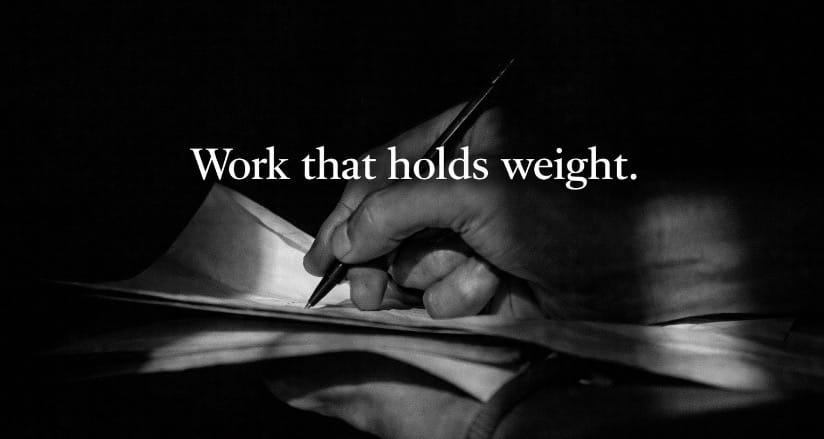
Access work from a collective of independent minds producing essays, ideas, and cultural projects grounded in depth and precision.