Incarnation Against the Machine
A technocratic Machine has seeped into Western lived reality, divorcing us from our humanity. It rests on a corrupt Theology and necessitates Theological resistance. This is achieved through an apprehension of the Incarnation, revealed in ancient Christian mysticism.

Introduction
In his 2025 polemic, Against the Machine: On the Unmaking of Humanity. English writer Paul Kingsnorth, describes a "Machine" shaping the post-modern reality of the West. He defines it as a "...network of power and control established through technology, globally, which seeks to control humanity and nature, understood as a network, rather than a top-down hierarchy. It bends Man and Nature to its own needs, and causes us to lose the essence of what it means to be human." For Kingsnorth, this Machine is made manifest through a post-modern Theology, and the Machine is responsible for our increasingly atomized way of life. Kingsnorth's prescriptions for resistance call us to return to praxises rooted in our respective traditional cultures through his "four P's", namely past, place, people and prayer.
Kingsnorth correctly identifies the source of the structural malaise plaguing contemporary Western life. Yet, his prescriptions for resistance remain insufficient, because he offers a cultural solution to a theological crisis. This is bound to fail. Only Theology can resist Theology.
Therefore, I offer you an apologetic, drawing from the work of Bonaventure, Athanasius, Leibniz, Symeon the Theologian, St. John of Damascus, and the Gospel of John, to offer a mystic mode of resistance to this postmodern Machine. It is a call to open ourselves to a daily encounter with the Eternal Divine Word, made evident through it's Incarnation in lived reality.
The Theology of The Machine
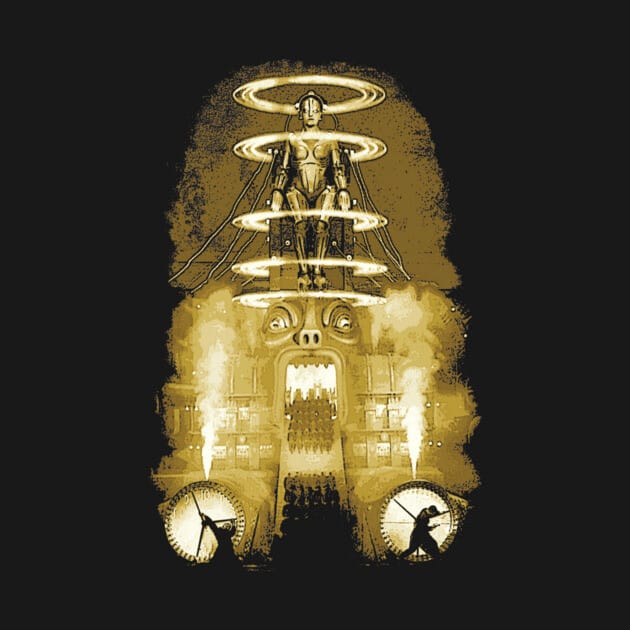
Kingsnorth describes The Machine through the lens of his "Four S's"
- Science: Where we come from. Science can offer us a non-mythic version of this story, and assert a claim as to the true.
- The Self: Who we are. The highest good is to serve the self and ensure its longevity.
- Sex: What we do. Both the highest means of sacral pleasure and, through public expressions of 'sexuality', an affirmation of individual identity.
- The Screen: Where we are going. The screen is both our main source of distraction from reality and the interface by which we are directed into the coming post-human reality of the Machine. (pp. 133)
The Machine is made manifest within:
...your iPhone, your Andriod, the Metaverse, Grammerly, Tinder, no-fault-divorce, for-profit surrogacy, 'manifesting your best self', Book-Tok, Witch-Tok 'Land Acknowledgements, America First, THC Beverages, Slack, bullshit-email-jobs, vaping, porn, the Manosphere, struggle sessions, rejecting your Whiteness, "In This House We Believe...", "Facts Don't Care About Your Feelings", "No One Is Illegal on Stolen Land","Make America Great Again", Looksmaxxxing, AI agents, AI slop, AI Data Centers, AI Mass Surveillance, Late-Stage Capitalism...
Poetry composed by Chat GPT.
The list goes on, with each example carrying a political valence, and to address the Machine's manifestations is to address "politics". To address "politics" is cyclical discourse, and it is this very cyclical discourse which fuels The Machine. Thus, to critique The Machine is to feed it. To acknowledge its harm becomes an exercise in Deconstruction. Deconstruction is the only mode of thought The Machine permits. That's the point, after all, to "unmake" or deconstruct our humanity.
I would synthesize The Machine through the following "Confession":
Science, in the pursuit of 'progress', is the highest mode of action. Creation and the Human Person can and should be altered through technology in the name of liberation from constraint. Sex is the penultimate pleasure, purpose, and center of self identity. The 'Self' is the whole of reality. To be liberated from constraints imposed by the body, freed from communal obligation, untethered from hierarchy, and finally to become emancipated from all 'unchosen' human relationships is Enlightenment, Nirvana, Heaven. Our screens are at once walls, prisms, and portals. Sacred objects incanting a metaphysical encounter with our own reflections, in a cycle of endless narcissism, which shapes sensory reality.
I frame it as a Confession of Machine Faith because Kingsnorth describes this thing as "less of an Ideology than a Theology", and it must be resisted. For Kingsnorth, resistance means returning to the "Four P's" of Culture
- Past: Where a culture comes from, it's history and ancestry.
- People: Who a culture is. A sense of being 'a people'.
- Place: Where a culture is. Nature in its local and particular manifestation.
- Prayer. Where a culture is going. Its religious tradition, which relates to God or the gods. (pp.131)
Though Kingsnorth cautions against retreating into tribalism, I fail to see how centering resistance to the Machine within 'Culture' does not lead back to an ethnocentric ideology. Moreover, merely resisting Machine (anti) Culture with traditional notions of Culture is Quixotic exercise. Without Theological resistance, Kingsnorth's polemic becomes another discursive turn in endless deconstruction. The Machine plows forward, fueled by this selfsame discourse. No amount of vitalism can conquer it. Like us, the Machine must bow to something higher than itself. This requires Theology. And to express Theology we must speak of God.
The Triune God
Christian Theology makes roughly this claim:
Corporeal and incorporeal reality emanate from a Creator, and this Creator is vested in the affairs of human beings. This Creator loves humanity and sent a part of itself to stuffer, die, and atone for the sins of what he created. If humanity believes this, and goes beyond a simple act of cognition, changes its chosen courses of action, human beings will exist in an afterlife beyond mortal, conscience existence.
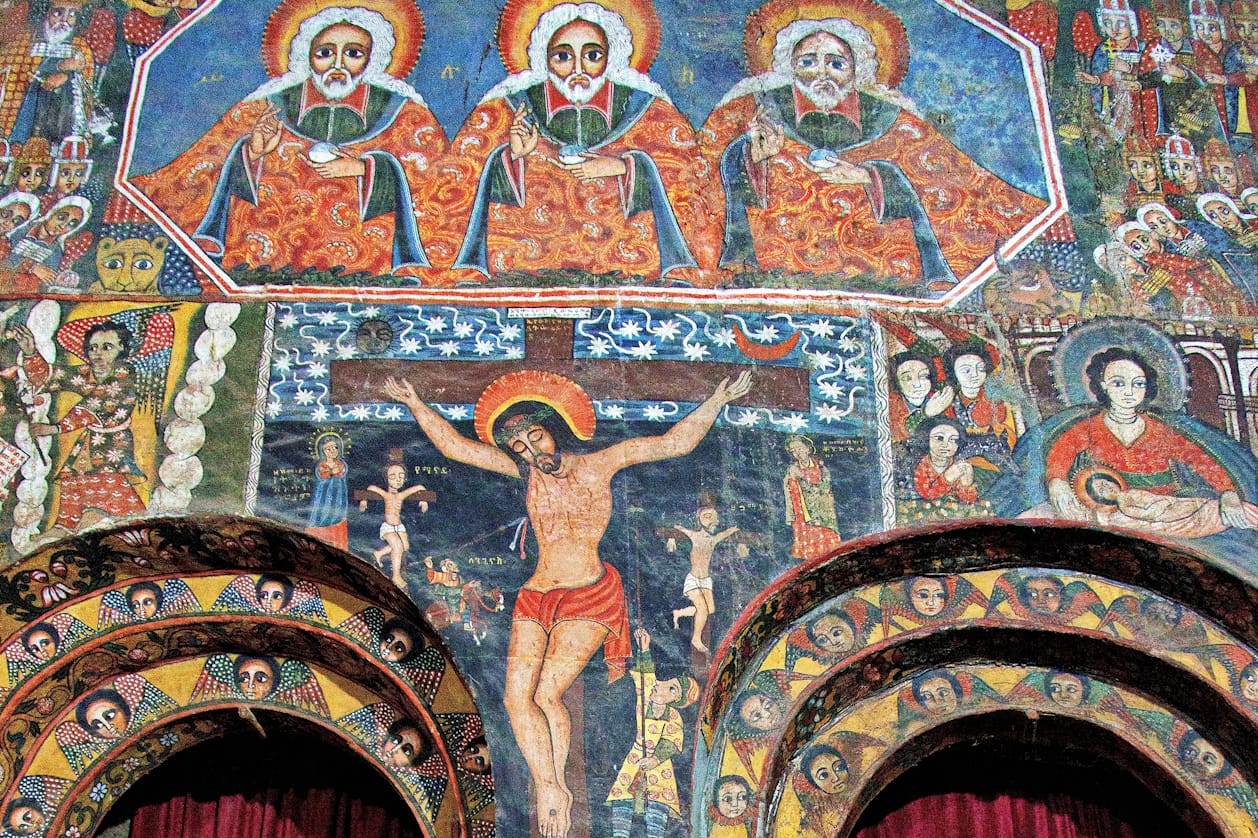
I think far too few Christians, and non-believers alike, truly appreciate the sheer gravity of this claim. The megachurch culture of Contemporary American Protestantism has reduced Jesus to a personal therapist, a "Homeboy", a bumper-sticker, a justifier for concerts and Ted-Talks. Non-believers need only take one look at Science, and this expression of the Christian understanding of material reality is, in all honesty, laughable. Speaking of God in this way is another iteration of Machine culture, and a Machine discourse with no real weight.To begin resisting The Machine, let us speak of God, as best we can, with the gravity He deserves.
On the Incarnation
If we understand that material reality, from quarks to supermassive black holes, has an origin point, a singularity from which it emanates, we arrive at questions of science, namely physics: What existed before and apart from this singularity? What was its causality? What sustains material reality, beyond and behind spacetime? How do we address the 'hard problem of consciousness'?
To begin to approach the complexity of these questions, we must address an older, simpler question: Is material reality, all that exists, has existed, or will exist, created?
The first verses of John's Gospel answer with an emphatic, 'Yes'.
1 In the beginning was the Word, and the Word was with God, and the Word was God.
2 The same was in the beginning with God.
3 All things were made by him: and without him was made nothing that was made.
4 In him was life, and the life was the light of men (John 1:1-4, RHE)
When we speak of God, we are speaking of the intelligence existing 'behind' all things, who created 'apart' from all things, from Whom all things that have been, are, and ever will be, emanate. God is the source of the Singularity lighting a nothingness with quarks, electrons, neutrons, and neutrinos. God is the intelligence, from which emanated nebula, plank time, galactic filaments, and supermassive black holes.
In his Breviloquium, Scholastic-theologian Cardinal Saint Bonaventure describes this as as the First Principle.
- "The first principle is immense and uncontainable, immaterial and invisible, eternal and immutable...The Principle of all things material as well as spiritual, natural as well as supernatural.”
This First Principle exists in three parts or "Persons", articulated in Christian Theology as the "Father, the Son, and the Holy Spirit", consubstantial in nature but distinct in action. An intelligence, the Godhead, must have metacognition. God must self-relate. This self-relation must be expressed in prime numbers, because anything divisible becomes a cyclical dialectic. Much like The Machine. Hence, The Trinity.
Drawing from Bonaventure, we understand the First Principle (God), while indivisible, contains three agentic components (or 'Persons').
- Father: the Creating Principle.
- Son: the Restoring Principle.
- Holy Spirit: the Sustaining Principle.
As God is Being itself, Being itself is, itself perfection. Being creates. A creative Being necessitates agency; will. It necessitates Logos. Logos itself is the "Word of God". The Word of God is Jesus of Nazareth. The work of the Word continues to be sustained. This is the Holy Spirit; the Paraclete.
And He is Good.
Yet, to speak of a Good God, we must ask the question of suffering; the world's suffering, my suffering, your suffering.
God of Love, World of Genocide?
If the Creative Principle, Our Father who art in Heaven is Good, if the Creator loves his image, if the Creator is Love itself... Why?
Why did He permit child soldiers in the Sierra-Leone Civil War? How could He permit the transatlantic slave-trade? Why does He allow Palestinian infants to starve in the midst of a genocide?
Why was your wife killed in a car wreak at two pm on a random Tuesday? Why did your uncle, the marathon runner, find out he had terminal brain cancer after that one physical? How could he allow your cousin to be sexually abused by a Priest?
If God is perfect, why Evil?
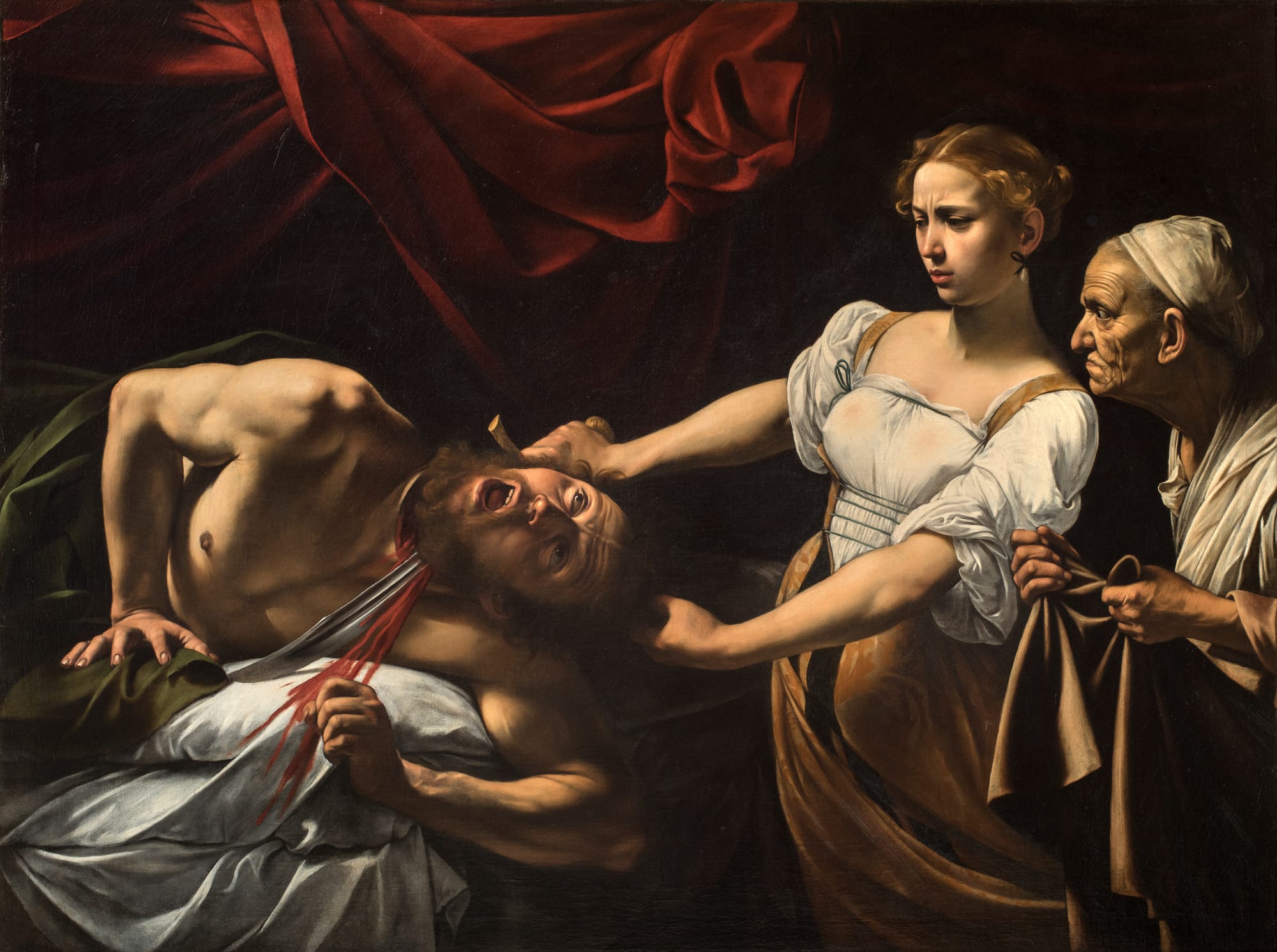
Leibniz observes that perfection cannot create perfection, because then it would create itself. An imperfect creation has flaws. It has deficiencies, hence Leibniz's "deficient cause". Those deficiencies are as immense and immeasurable as creation itself. The symmetry of the DNA strand exists, juxtaposed against the horrors of the Holocaust. We can call these deficiencies, "Sin".
For Saint Athanasius of Alexandria, sin is not a case of "trespass only". Sin is the Corruption of humanity. "Sin" is not a trite series of bedroom prohibitions. Sin the corruption of genocide, human sacrifice, slavery, infant starvation, senseless war. A loving God must act to restore that which is corrupt to a state of incorruption. That action was the Incarnation of the Word.
The life, death, and resurrection of Jesus of Nazareth, the Christ.
The Word Made Flesh
"And the Word was made flesh, and dwelt among us, (and we saw his glory, the glory as it were of the only begotten of the Father,) full of grace and truth." - John 1:14
When we speak of the Christ, we are speaking of the Word; of the Logos. The creative agency which brought material reality into existence. And, because of the immensity of creation's corruption, restoration required the cause of the Singularity; the architect of plank-time, quarks, the Andromeda galaxy, and the Galapagos tortoise, to physically enter into material reality at a world historical moment, to become Incarnate in a human person, and by proxy, to become imbued into our physical world.
For Athanasius, and for Christians, there is no other way for the Creator to restore Creation to himself, as...
- "Who, save the Word of God Himself, Who also in the beginning had made all things out of nothing? His part it was, and His alone, both the bring again the corruptible to incorruption...For this purpose then, the incorporeal and incorruptible and immaterial Word of God entered our world.” (Athanasius, On the Incarnation)
When the Word became flesh the Word of God "became Himself an object for the senses, so that those who were seeking God in sensible things might apprehend the Father".In other words, God is not relegated to the mind; He is not "out there". God is apprehensible in our material world.
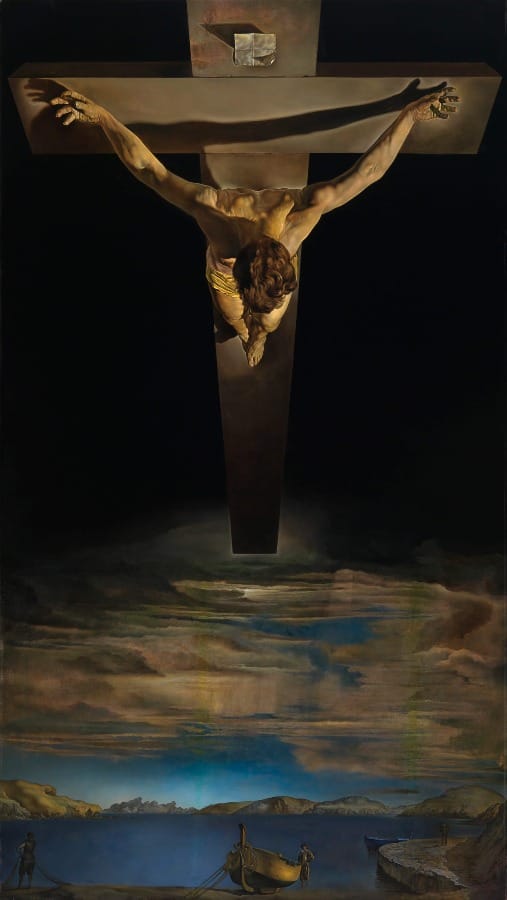
Incarnate Christ and the Senses
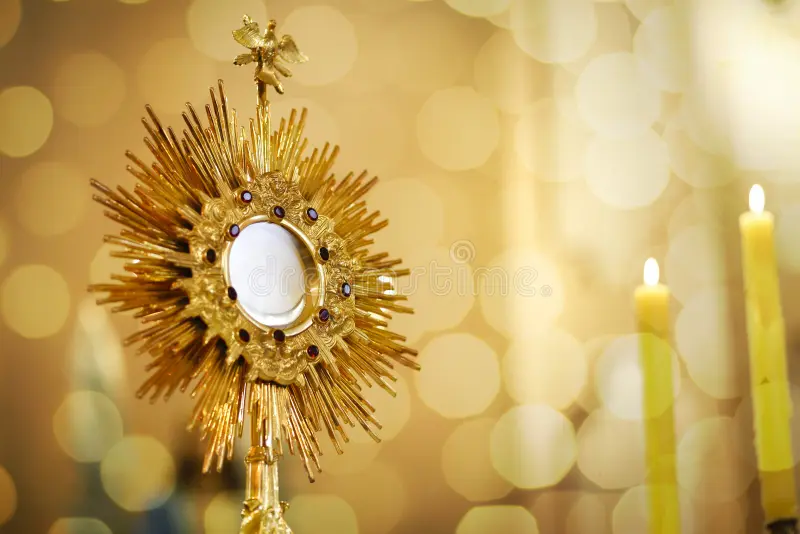
Kingsnorth and I share a fundamental Theological position: God can be experienced, directly, in the physical world, both intellectually and literally through the senses. The source and summit of this experience is the partaking of the Eucharist. Roman Catholic and Eastern Orthodox Christians believe that, through transubstantiation, the Eucharist is the Body and Blood of Jesus Christ. It is not a symbol. It is not spiritual. There is a literal change in substance within the Host, making it the Body and Blood of Christ in it's essential reality, even if it's taste and texture remain the same.
The Eucharist is an instant of metaphysical encounter; the Mystical Body of Christ (the Church) becoming one with the Divine Body & Blood of Christ (the Eucharist). The Eucharist does not 'Save' in and of itself. Baptism and faith Save. Yet, the real sensory experience of Christ (The Word) in the Eucharist sustains this restoration, as we walk in Faith, following 'The Way' of Christ's teachings.
Though the Eucharist is the penultimate source of sensory experience with the Divine, and all sensory experience of God flows from the Eucharist, we are able to apprehend and encounter God through other objects and sensory experiences. For, as John of Damascus argued during the 7th-8th century iconoclasm debates, God's entrance into the world, physically in the Person of Jesus, implies that other objects of the senses can serves as conduits between ourselves and the Divine.
This rests on Athanasius' earlier claim that:
- “…being the Word, so far from being Himself contained by anything, He actually contained all things Himself. In creation He is present everywhere yet is distinct in being from it; ordering, directing, giving life to all, containing all, yet is He Himself the Un-contained existing solely in His Father... He is still Source of life to all the universe, present in every part of it, yet outside the whole; and He is revealed both through the works of His body and through His activity in the world."
For a more comprehensive understanding of the implication of Incarnation, we turn, again, to Bonaventure.
- “Likewise, the Son of God, the very small, poor and humble One, assuming our Earth and made of our earth, not only came upon the surface of the Earth, but to the depths of its center, that is He has wrought Salvation in the midst of the earth, for after his crucifixion, His soul went down into hell and re-established the heavenly thrones.” (Bonaventure, "Collations on the Six Days", 12)
Bonaventure's thesis, present in the Franciscan intellectual tradition, is that, through the Incarnation, it was not simply mankind which was restored through the Incarnation, creation itself. And, though there is a hierarchy of encounter with God, Baptism & the Eucharist holding primacy, we can touch the Godhead through the world itself.
Bonaventure shows us that God...
- “...reveals Himself and makes Himself known in a general way through all the effects which emanate from Him, in which we say that He exists by essence, power, and presence, extending Himself to all creatures” (p. 50)
Through the Incarnation, the Word is channeled through all aspects of creation. Mystical, sensory experience with Christ can be found each and every day, if we choose to participate in that which is Sacred.
The Mystic resists the Machine.
Partaking in the God-likening Flow
In chapter eight of John's Gospel, Christ proclaims that "if you continue in my word, ye shall be disciples indeed, and you shall know the truth, and the truth shall set you free". According to the Gospel, He that "is of God heareth the word of God", and as Christ himself proclaims, "Amen, Amen, I say unto you, if any man keep my word, he shall not see death forever".
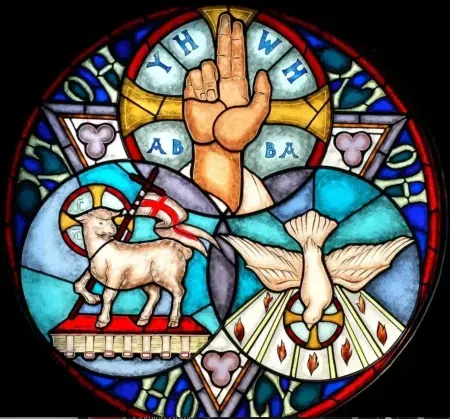
To "continue in" the "Word" extends far beyond the cognitive act of belief. It is a change of action. What Ratzinger calls a "turning away" and a "turning towards" a new path. For Apostolic Christians, this is a life of Sacramentality. Baptism. Eucharist. Confirmation. Confession. Marriage. Holy Orders. Last Rites. These are ritual actions in the physical world which have true spiritual efficacy. They serve to organize the life of the individual and, melded with faith, a conduit for morally just action in the world. Kingsnorth finds value in this schema for living. However, I feel that he fails to apprehend the absolute reality of the Word in everyday, sensory experience. To resist the Machine we must understand visions.
- "For unless the word resound in the ear of the heart, the splendor shine in the eye, the vapor and emanation of the Almighty be perceived as smell and His sweetness as taste, and unless eternity fill the soul, man is not fit to understand visions..." (Bonaventure, COLLATIONS ON THE SIX DAYS, p. 54)
Bonaventure recognizes that the Incarnation is present in our sensory experience of seemingly insignificant things of beauty. When one sees the world through a lens of Incarnation, William Blake's metaphoric request for us to "see a World in a grain of sand / and a Heaven in a Wild Flower / Hold Infinity in the palm of your hand / And Eternity in an hour" becomes literal. This literal understanding is a striving towards eternal Beatitude.
- “If, then, the rational soul is to become worthy of eternal beatitude, it must partake of the God-likening flow, because this inpouring, rendering the soul deiform, comes from God, conforms to God, and leads to God as an end.” (Bonaventure, THE BREVILOQUIUM)
He insists that our souls strive towards the apprehension of Beatitude; the full and complete vision of the Godhead's beauty, 'as it was in the beginning, is now, and ever shall be, world without end'. One cannot stress enough how far beyond Kingsnorth's 'Four P's' this idea extends. It is at once wholly universal for all individuals across time, place, and culture, and it is impervious to the will of The Machine.
The Christian-Mystic Against Machine
The root of resistance to Machine (anti-) Culture resides in participating in this 'God-likening Flow'. In other words, a Mysticism. A mysticism in the everyday.
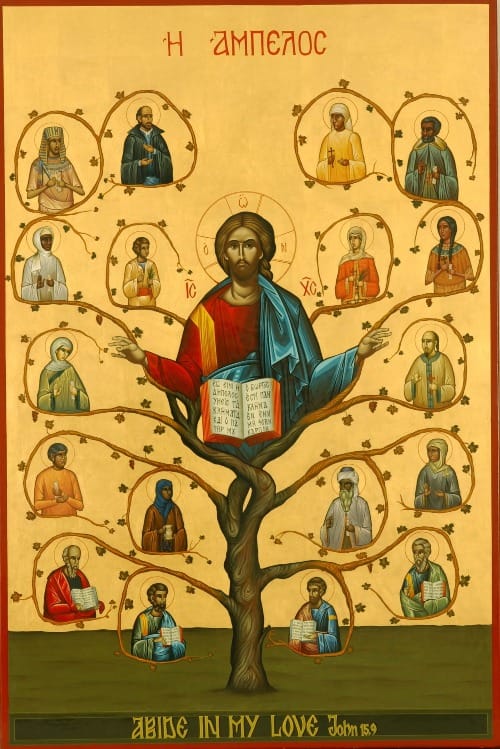
Mysticisms exist across history and across religious traditions. Vajrayana Buddhism, Zen Buddhism, Sufi Islam, and Daoism, to name a few. When we speak of mysticism, we are speaking of ancient, systematic practices of participation with the Divine. I believe it is possible for the Christian to respect practitioners of other religious traditions, as receptive to the Word (Logos) of God. The Christian may hold steadfast in our faith's truth-claims, while recognizing that other faith traditions may provide a praxis for "keeping" Christ's word. The individual may fail to apprehend the full, revealed Truth, while still "continuing in my Word".
The truly Mystic is something antithetical to the Machine anti-culture algorithmic aesthetic of Witch-tok, mindfulness practice, "manifestation", incense, crystals, chakra, tarot, and the litany of other ritual nods to 'self-improvement'. All of these pieces of older, more systematic traditions, which rest of profound truth-claims. Done in piecemeal, these rituals, at best, are a salve to ameliorate the desolate spiritual condition of postmodern late-Capitalism. At worst, they aid in the Machine's decoupling of ourselves from our humanity. The Buddhist Bikshu, the Sufi Darvesh, and the Christian Carthusian, all draw from internally consistent, systematic truth claims, and their praxises ask something of them. They are called to selflessness. They are called to humility. They are called to kindness. They are called towards everything the Machine attempts to destroy.
A Machine spirituality calls us to "manifest our desires". That's called "Greed".
True Mysticism requires humility, understanding, and ritual. We must begin a journey towards sensory, mystical encounter with the Incarnate Logos in it's penultimate expression: The Eucharist. For, partaking in this communion requires the participant to approach the Body and Blood with a clean soul, to have a cognitive understanding of these divine metaphysics, and to engage in a ritual conducted, near self-same, for two thousand years.
Eleventh century Orthodox theologian, Symeon the New Theologian asserts that Christ is, "always and forever descending on those who are worthy, and this occurs both now and every hour". (Symeon, Third Ethical Discourse). If we so choose, we may be led "up through" created things "to the invisible glory of the divinity in [God's] Person..." In terms of encountering the Eucharist, Symeon the New Theologian states...
- "...you should suspect nothing physical, nor conceive anything earthly, but instead see this bread with spiritual eyes, and see that this little particle is made divine, and has become altogether like the bread which came down from heaven which is True God..."
Now, I ask, What happens when we choose to see the world with the selfsame 'spiritual eyes'? To strive towards Beatitude, we need merely open our senses to what surrounds us. We must reject that which divorces us from the Created world, divorces us from our humanity, and divorces us from God. This is an explicit rejection of substituting real experience with virtual experience, it is the choice to actively participate in social life, it is a call to encounter with the natural world, a call to relation with other persons and the Divine. This is a universal call to Encounter. It is a trans-temporal and trans-historic Election of all People from all Places.
In short, the only "P" that conquers the Machine is Prayer.
Living in Mystic Prayer
Simply defined, prayer is the "lifting the heart and mind to God" through a process of praise, thanksgiving, penance, and petition. Rather limit our understanding of prayer as one's private or public conversation with God, what if we are to expand the parameters of prayer? For, to praise the beauty of the created world, to express gratitude, to acknowledge our faults, and to ask for assistance from the Divine, and from one another, is to be engaged with the world and its creatures.
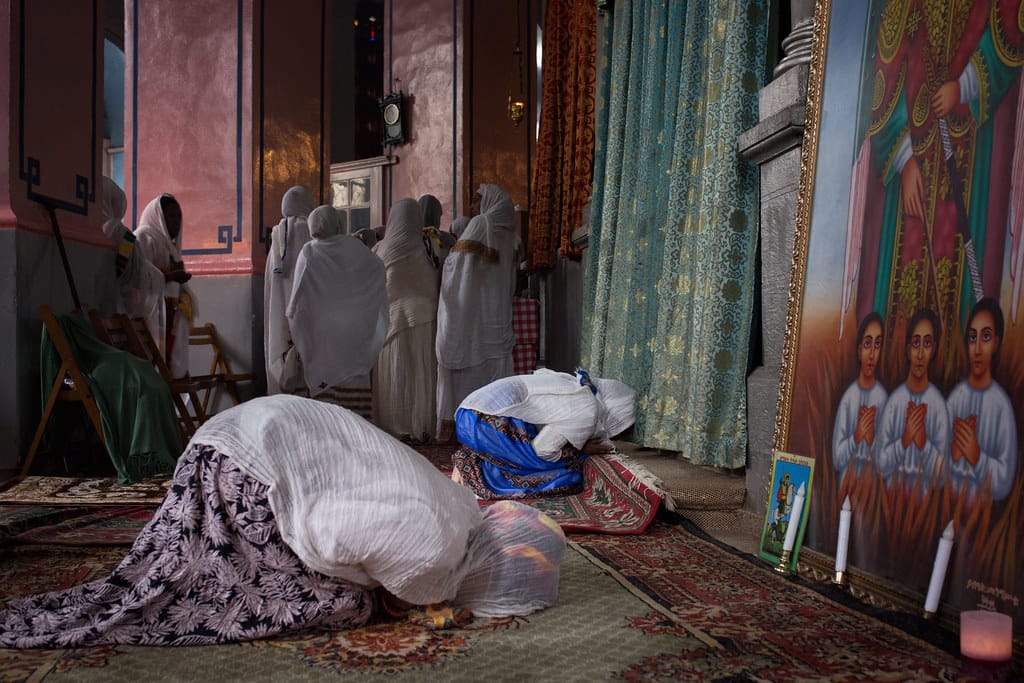
Turning, once again, to Bonaventure, we understand that God is made visible through Creation. In his Mystical Opuscula, he writes of a "harmonious proportion" within Creation, derived from their proportional Power, Form, and Operation; i.e. the Father, Son, and Holy Spirit. Aspects of the created world achieve a similitude, and through our own judgement, we may engage in a process of elimination and abstraction to encounter these aspects "In the act of enjoyment, the external pleasurable objects enter into the soul through a threefold delight caused by similitude."
'Tuning in' to the Created world, and by proxy, 'tuning in' to the beautiful things created by the hands of human beings is a form of prayer. One could call this a "Daily Christian Mysticism", whereby we put down our devices, take off our headphones, and walk through the Machine world, untouched by it's malevolence.
- "And so it comes about that the whole world enters into the human soul through the doors of the five senses by the three operations..."
We achieve this by allowing an "impression of similitude" to enter into the soul, and "through this impression, the species leads to its point of origin, that is the object to be known..." The process...
- "...Clearly suggests that the Eternal Light engenders of Itself a coequal, consubstantial, and coeternal Similitude or Resplendence. It suggests that the image of the invisible God, and the brightness of His glory, and the Image of his substance, exists everywhere, by reason of His original begetting (...) so is He united, by the grace of union, to an individual rational nature. Through this union He would lead us back to the Father, as to the Fountainhead and Original Object. (...) this is a clear proof that in all these things, as in so many mirrors, there may be seen the eternal generation of the Word, Image, and Son, eternally proceeding from God the Father"
Thus, we need not retreat to Monasteries to apprehend the Logos. The Trinity, the Creating, Restoring, and Sustaining principles are visible, everywhere, and at all times. All that is required of us is to say "yes" to God's invitation, and by partaking in Christ, we may partake of Beauty.
Saying "yes" necessitates prayer, liturgy, and ritual. But, the "yes" extends far beyond the Church sanctuary. The "yes" is smelling springtime without headphones, it is a conversation with a stranger, it is a book rather than a phone, it is good wine, it is delicious tobacco, it is sensuality and romance, it is having children, it is a willingness to give rather than to take. It is sacrifice. It is joy.
We need not retreat into a tribalist sense of Culture to escape the Machine and reconnect with our Humanity. Our Humanity can be remade in the image of our Creator. The reality is universal, cross-cultural, trans-historical, and trans-temporal.
Conclusion
Kingsnorth identifies that The Machine promises that its techno-Capitalist theology will give us "a world remade for the better". Instead, it gives us "the Ultimate Idol: our own image, reflected back at us in little screens" (Kingsnorth, 134). Kingsnorth correctly observes the harm of this Idolatry, but what he fails to acknowledge is that, from the Christian understanding of reality, the Machine is doomed to fail.
The First Principle, the Logos, the Word, the Christ, has entered into Creation and conquered death, thereby destroying the Machine's "power of Death" (Hebrews 2:14) We are invited to encounter Him to allow Him to bring us to the fullness of our humanity. This truth is so utterly profound in its transcendence of "people, past, and place" that it makes The Machine's Gospel of "science, sex, self, and screen" impotent.
After all...
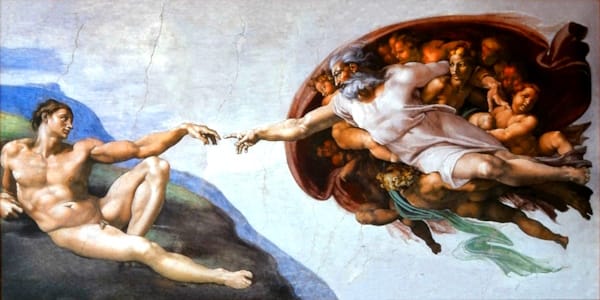
What is the power of Chat GPT in the face of the Godhead entering into His own creation to restore humanity?
Works cited:
Athanasius, St. On the Incarnation. Translated by a Religious of C.S.M.V. Introduction by C.S. Lewis. Yonkers, NY: St. Vladimir's Seminary Press, 1996.
Bonaventure, St. Collations on the Six Days. Translated by José de Vinck. Paterson, NJ: St. Anthony Guild Press, 1970
Bonaventure, Mystical Opuscula Vol 1.: Journey of the Mind to God. Translated by José de Vinck. Paterson, NJ: St. Anthony Guild Press, 1970
Bonaventure, St. Breviloquium Translated by José de Vinck. Paterson, NJ: St. Anthony Guild Press, 1970
Kingsnorth, Paul. Against the Machine: On the Unmaking of Humanity. Penguin Random House, 2025
McGinn, B. (Ed.). (2006). The Essential Writings of Christian Mysticism (Modern Library Classics). New York: Modern Library
Written by Britton Buttrill
Access work from a collective of independent minds producing essays, ideas, and cultural projects grounded in depth and precision.